
Contract disputes can happen to anyone—business owners, freelancers, or even individuals renting a home. These disagreements often begin with misunderstandings or broken promises. Sometimes, one side fails to deliver what was agreed, or the contract language is unclear. When this happens, stress and confusion can follow. The stakes can be high, especially if money or reputation is involved. That’s why legal services play a crucial role in helping people resolve contract disputes quickly and fairly. They can guide you, protect your interests, and even prevent costly mistakes. In this article, you’ll discover how legal services help during contract disputes, the steps they take, and why their support is so valuable.
What Are Contract Disputes?
A contract dispute is a disagreement between two or more parties about the terms, interpretation, or performance of a contract. Contracts can be written or verbal, but written contracts are easier to prove in court. Common reasons for contract disputes include:
- Breach of contract: One side fails to do what was agreed.
- Ambiguous terms: The contract has unclear language.
- Fraud or misrepresentation: Someone lied or hid important facts.
- Non-payment: Payment is delayed or not made at all.
For example, imagine a builder agrees to finish a house by June. If the house isn’t ready on time, the homeowner might claim a breach of contract. Or, if the contract doesn’t clearly say who pays for materials, both sides might argue about responsibility.
Role Of Legal Services In Contract Disputes
Legal services are more than just lawyers in courtrooms. They include legal advice, negotiation, document review, and representation. Here’s how they help:
Understanding Contract Terms
Lawyers know how to interpret contracts. They can explain complex terms in simple language. This helps both sides understand their rights and duties. Many people sign contracts without fully understanding the details. Legal experts spot hidden clauses or risks that others miss.
Evaluating The Dispute
Not every contract issue needs a lawsuit. Legal services evaluate the situation to see if there is a real dispute. They ask:
- Was there a valid contract?
- Did someone break the agreement?
- What evidence supports each side?
This saves time and money by focusing only on real issues.
Negotiation And Mediation
Most disputes don’t go to court. Lawyers can negotiate with the other side to reach a settlement. Mediation is another option, where a neutral party helps both sides find a solution. This process is usually faster and cheaper than a trial.
Drafting Legal Documents
If a settlement is reached, lawyers write clear agreements to avoid future problems. If the dispute continues, they prepare legal documents for court. These include:
- Complaint: Explains the dispute to the court.
- Answer: Responds to the complaint.
- Motion: Requests specific actions from the court.
Court Representation
If negotiation fails, lawyers represent clients in court. They argue the case, present evidence, and protect client interests. Court cases can be complex, with strict rules and deadlines. Legal experts know how to handle these challenges.
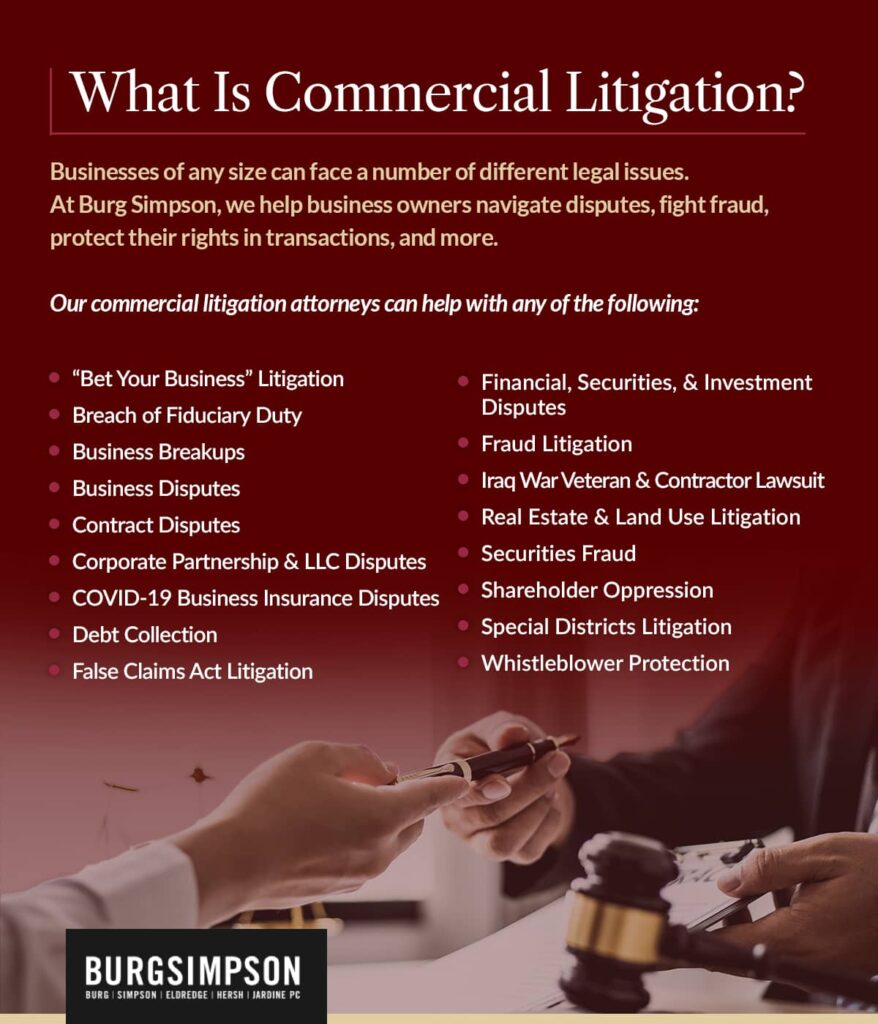
Credit: www.burgsimpson.com
Steps Legal Services Take During Contract Disputes
Resolving a contract dispute involves several steps. Each step requires careful attention to detail and knowledge of the law.
1. Initial Consultation
The lawyer meets with the client to understand the problem. They review the contract and any evidence. This is the time to ask questions and share concerns.
2. Reviewing The Contract
Legal professionals closely read the contract. They look for:
- Exact terms and conditions
- Obligations of each party
- Any loopholes or unclear language
They compare the contract to state or federal laws.
3. Gathering Evidence
Evidence is crucial in contract disputes. Lawyers collect:
- Emails or messages related to the deal
- Payment records
- Witness statements
- Any relevant documents
This builds a strong case.
4. Exploring Resolution Options
Lawyers suggest ways to settle the dispute. Options include:
- Direct negotiation
- Mediation with a third party
- Arbitration (binding decision by an expert)
They explain the pros and cons of each option.
5. Preparing For Litigation
If settlement fails, lawyers prepare for court. This includes:
- Filing legal documents
- Collecting additional evidence
- Planning arguments and strategy
Trials can take months or even years, so preparation is key.
6. Representing In Court
Lawyers present the case before a judge or jury. They:
- Question witnesses
- Cross-examine the other side
- Show evidence
- Make legal arguments
The goal is to win or reach a fair outcome.
Comparing Legal Services: In-house Vs. External Firms
Many businesses face a choice—use their own legal team or hire an outside firm. Here’s a comparison to help you decide:
| Factor | In-House Legal Team | External Law Firm |
|---|---|---|
| Cost | Fixed salary, lower for frequent needs | Higher fees per case |
| Expertise | Knows company’s contracts | Broad experience with many industries |
| Response Time | Immediate access | May take longer to start |
| Objectivity | May be influenced by company culture | More independent advice |
Most small businesses and individuals choose external law firms because they offer independent advice and broad experience.

Credit: queenseagle.com
Real-world Examples Of Contract Disputes
Understanding real cases shows why legal services matter. Here are two examples:
Example 1: Freelancer Vs. Client
A graphic designer completed a project, but the client refused to pay, saying the work did not meet the contract terms. The designer’s lawyer reviewed the contract and emails. They found the client had approved the design. After negotiation, the client paid the agreed fee.
Example 2: Business Partnership Split
Two partners ran a restaurant. One wanted to leave, but the contract didn’t explain how to divide assets. Their lawyers mediated and wrote a new agreement. Both sides avoided a lawsuit and reached a fair solution.
Common Mistakes During Contract Disputes
Many people make mistakes that weaken their case. Avoid these errors:
- Ignoring contract details: Small words matter. Missing a clause can change everything.
- Not saving evidence: Emails, messages, and receipts are often lost.
- Delaying action: Waiting too long can hurt your position or miss legal deadlines.
- Trying to handle it alone: Without legal help, you may misunderstand rights or make costly errors.
- Emotional decisions: Acting out of anger can lead to poor choices.
Legal services help prevent these mistakes, guiding clients to better outcomes.
Data: Contract Dispute Resolution Methods
Here’s a comparison of popular resolution methods:
| Method | Time (Average) | Cost | Success Rate |
|---|---|---|---|
| Negotiation | 2-6 weeks | Low | ~70% |
| Mediation | 1-3 months | Medium | ~60% |
| Arbitration | 2-6 months | High | ~80% |
| Litigation (Court) | 1-2 years | Very High | ~50% |
As the data shows, negotiation and mediation are faster and less expensive. Arbitration has a high success rate but costs more. Litigation takes the longest and is most expensive.
Benefits Of Using Legal Services
Legal services offer several key benefits during contract disputes:
- Expert guidance: Lawyers understand the law and contract details.
- Risk reduction: They spot potential problems early.
- Cost control: Settling early can save money compared to long court battles.
- Peace of mind: Clients feel less stress knowing experts handle their case.
- Better outcomes: Legal support often leads to fairer settlements.
Many beginners miss the importance of clear communication with legal experts. Sharing all details and documents helps lawyers build a stronger case. Another insight: Legal services can help rewrite contracts to avoid future disputes—a step often forgotten after a problem is solved.
Choosing The Right Legal Service
Picking the right legal service matters. Consider these factors:
- Experience with similar disputes
- Clear fee structure
- Good communication
- Positive reviews or references
Avoid choosing solely based on price. A low-cost lawyer may lack experience or miss key details. It’s wise to ask about previous cases and success rates.
Here’s a quick comparison of lawyer fee types:
| Fee Type | Description | When Used |
|---|---|---|
| Hourly | Pay per hour worked | Complex disputes |
| Flat Fee | One price for the whole case | Simple contract reviews |
| Contingency | Pay only if you win | Cases with financial claims |
Most contract disputes use hourly or flat fees. Contingency is rare unless there’s a big financial claim.
Preventing Contract Disputes Before They Start
Legal services don’t just solve problems—they help prevent them. Here are ways to reduce the risk of disputes:
- Use clear contracts: Avoid vague language. Spell out every detail.
- Review terms with a lawyer: Get expert advice before signing.
- Keep written records: Save emails, receipts, and changes.
- Update contracts regularly: Make sure they match current needs.
- Train staff and partners: Teach everyone the importance of contracts.
Many people skip these steps, leading to future problems. Prevention saves time, money, and stress.

Credit: www.bicakhukuk.com
Frequently Asked Questions
What Should I Do First If I Have A Contract Dispute?
Start by gathering all relevant documents and evidence. Then, consult a legal expert to understand your rights and options. Avoid contacting the other party until you have advice.
How Long Does A Contract Dispute Usually Take To Resolve?
It depends on the method. Negotiation can take weeks, mediation months, and court cases years. Most disputes settle faster with legal support.
Can I Handle A Contract Dispute Without A Lawyer?
You can try, but it’s risky. Many people miss key details or misunderstand legal language. A lawyer improves your chances of a fair outcome.
What Happens If I Lose A Contract Dispute In Court?
You may have to pay damages, legal fees, or follow the court’s orders. It’s important to prepare well and seek expert guidance.
Where Can I Learn More About Contract Law?
A good place to start is Wikipedia’s Contract Law page, which explains the basics and offers links to deeper resources.
Contract disputes are stressful, but legal services make the process clearer, safer, and often faster. If you face a contract problem, seeking expert help early can save time, money, and reputation. Legal professionals not only solve disputes—they help prevent them.
With the right guidance, you can protect your interests and move forward with confidence.
Read More:
- How Family Legal Services Can Protect Your Rights Effectively
- Affordable Legal Services for Individuals And Businesses: Save Big
- The Ultimate Guide to Choosing the Right Legal Service for You
- What to Expect from a Professional Legal Service: Expert Guidance
- Common Legal Problems And How Lawyers Solve Them: Expert Solutions
- The Importance of Legal Advice Before Signing Contracts Explained
- How Legal Services Protect Your Business from Risk Effectively
- Why Small Businesses Should Invest in Legal Services for Success